
Electric vehicles for beginners can seem overwhelming at first. Battery types, charging speeds, range anxiety, there’s a lot to learn. But here’s the good news: EVs are simpler than most people think. They have fewer moving parts than gas-powered cars, require less maintenance, and cost less to operate over time.
This guide breaks down the essentials. Readers will learn what electric vehicles are, how they work, and what to consider before making a purchase. Whether someone is curious about going electric or ready to buy their first EV, this article covers the fundamentals they need.
Table of Contents
ToggleKey Takeaways
- Electric vehicles for beginners are simpler than they seem—EVs have fewer moving parts, require less maintenance, and cost less to operate than gas-powered cars.
- The three main EV types are Battery Electric Vehicles (BEVs), Plug-in Hybrids (PHEVs), and Hybrid Electric Vehicles (HEVs), each offering different levels of electric capability.
- Charging options range from slow Level 1 (120V household outlets) to DC fast chargers that add 100+ miles in just 20-30 minutes.
- EV owners can save $1,000 or more annually on fuel and may qualify for federal tax credits up to $7,500.
- Before buying your first electric vehicle, evaluate your daily driving distance, home charging options, budget, and actual range needs.
- Range anxiety fades quickly for most owners since modern EVs offer 150 to 400+ miles per charge—more than enough for typical daily driving.
What Is an Electric Vehicle?
An electric vehicle (EV) uses one or more electric motors for propulsion. Instead of burning gasoline, EVs draw power from rechargeable battery packs. These batteries store electricity and deliver it to the motor, which turns the wheels.
The concept isn’t new. Electric cars existed in the late 1800s. But modern electric vehicles have advanced significantly. Today’s EVs offer ranges exceeding 300 miles on a single charge. They accelerate quickly and operate quietly.
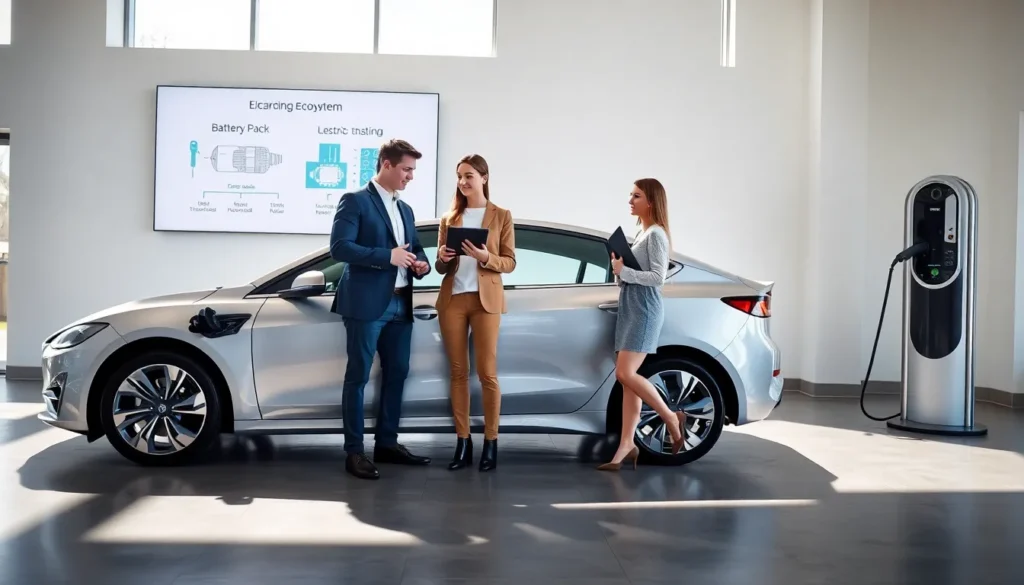
The basic components of an electric vehicle include:
- Battery pack: Stores electrical energy (usually lithium-ion cells)
- Electric motor: Converts electrical energy into mechanical motion
- Inverter: Changes DC power from the battery to AC power for the motor
- Onboard charger: Manages the charging process
- Regenerative braking system: Captures energy during braking and sends it back to the battery
Electric vehicles produce zero direct emissions. They don’t have exhaust pipes or tailpipes. This makes them popular among drivers who want to reduce their environmental impact.
Types of Electric Vehicles
Not all electric vehicles work the same way. There are three main categories buyers should understand.
Battery Electric Vehicles (BEVs)
BEVs run entirely on electricity. They have no gasoline engine or fuel tank. Popular examples include the Tesla Model 3, Chevrolet Bolt, and Nissan Leaf. These vehicles must be plugged in to recharge.
BEVs offer the simplest ownership experience. There’s no oil to change, no spark plugs to replace, and no transmission fluid to check. They provide the lowest operating costs among all vehicle types.
Plug-in Hybrid Electric Vehicles (PHEVs)
PHEVs combine an electric motor with a gasoline engine. They can travel 20-50 miles on electric power alone. After the battery depletes, the gas engine takes over. The Toyota RAV4 Prime and Jeep Wrangler 4xe are popular PHEVs.
These vehicles work well for drivers who want electric capability but worry about range. They offer flexibility during the transition to full electric.
Hybrid Electric Vehicles (HEVs)
Standard hybrids use both electric motors and gas engines but cannot plug in. The battery charges through regenerative braking and the gas engine. The Toyota Prius is the most recognized HEV.
HEVs improve fuel economy but don’t qualify as true electric vehicles. They still rely primarily on gasoline.
Benefits of Driving Electric
Electric vehicles offer several advantages over traditional gas-powered cars.
Lower fuel costs: Electricity costs less than gasoline in most areas. Drivers can save $1,000 or more annually on fuel. Charging at home during off-peak hours reduces costs further.
Reduced maintenance: Electric vehicles have fewer parts that wear out. No oil changes, no transmission repairs, no exhaust system replacements. Brake pads last longer too, thanks to regenerative braking.
Tax incentives: Federal tax credits up to $7,500 remain available for qualifying electric vehicles. Many states offer additional rebates and incentives. These programs make EVs more affordable.
Better performance: Electric motors deliver instant torque. Many electric vehicles accelerate faster than comparable gas cars. The driving experience feels responsive and smooth.
Environmental impact: Electric vehicles produce zero tailpipe emissions. Even when accounting for electricity generation, EVs typically have a smaller carbon footprint than gas vehicles. This gap widens as the electrical grid becomes cleaner.
Quiet operation: Electric motors run almost silently. This creates a peaceful driving environment and reduces noise pollution in neighborhoods.
Charging Basics and Infrastructure
Understanding charging is essential for electric vehicle ownership. There are three levels of charging, each with different speeds and applications.
Level 1 Charging
Level 1 uses a standard 120-volt household outlet. It’s the slowest option, adding about 3-5 miles of range per hour. This method works for overnight charging when daily driving needs are modest. Most electric vehicles come with a Level 1 charging cord.
Level 2 Charging
Level 2 requires a 240-volt outlet (like those used for dryers). It adds 15-30 miles of range per hour. Most EV owners install Level 2 chargers at home. Public charging stations at workplaces and shopping centers typically offer Level 2.
DC Fast Charging
DC fast chargers provide the quickest charging speeds. They can add 100+ miles of range in 20-30 minutes. These stations appear along highways and in urban areas. They’re ideal for road trips but cost more per kilowatt-hour.
Charging infrastructure continues to expand. The U.S. now has over 60,000 public charging stations with 180,000+ individual ports. Networks like Tesla Supercharger, Electrify America, and ChargePoint cover major routes. Apps help drivers locate nearby stations and check availability in real time.
Key Considerations Before Buying
Before purchasing an electric vehicle, buyers should evaluate several factors.
Daily driving distance: Most Americans drive fewer than 40 miles per day. Almost any modern electric vehicle handles this easily. But buyers should consider occasional longer trips too.
Home charging capability: Having a dedicated parking spot with electrical access makes EV ownership much easier. Apartment dwellers should check for workplace or nearby public charging options.
Budget: Electric vehicles have higher upfront costs than similar gas cars. But, tax credits, lower fuel costs, and reduced maintenance narrow this gap over time. Used EVs offer budget-friendly entry points.
Range needs: Modern electric vehicles offer ranges from 150 to 400+ miles. Buyers should choose based on their actual driving patterns, not worst-case scenarios. Range anxiety fades quickly for most owners.
Charging speed compatibility: Not all EVs charge at the same rate. Buyers who plan to use DC fast chargers frequently should verify their vehicle supports faster charging speeds.
Resale value: Electric vehicle resale values vary by brand and model. Teslas tend to hold value well. Battery degradation concerns have proven less severe than early predictions suggested.