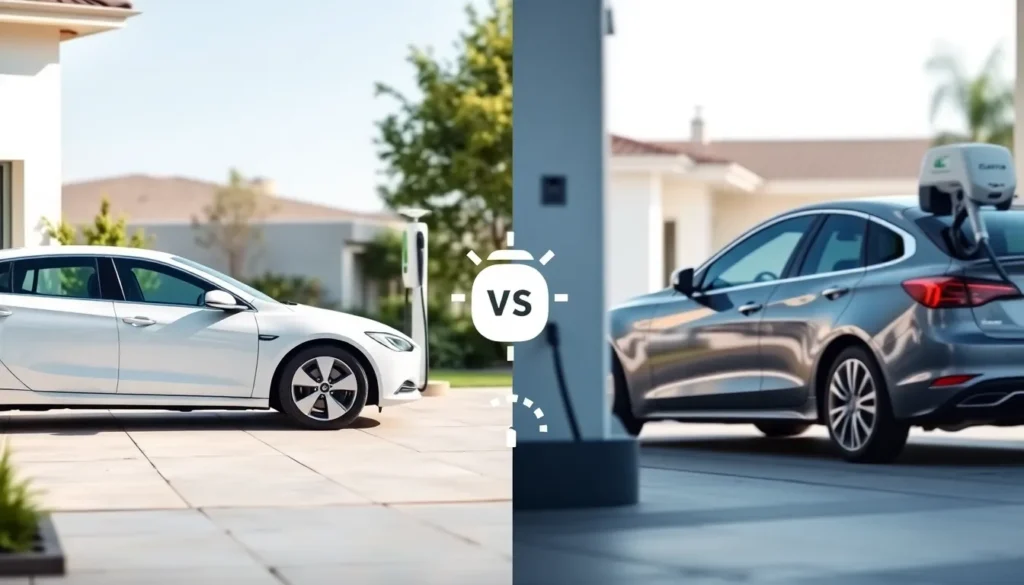

Electric vehicles vs gas cars, it’s a debate that shapes every new car purchase today. Buyers weigh fuel savings against sticker prices. They consider charging networks against gas station convenience. Environmental concerns clash with range anxiety. This guide breaks down the key differences between electric vehicles and gas-powered cars. It covers costs, environmental impact, driving range, maintenance, and performance. By the end, readers will know which option fits their lifestyle, budget, and priorities.
Table of Contents
ToggleKey Takeaways
- Electric vehicles cost more upfront but often become cheaper to own over five years due to lower fuel and maintenance expenses.
- EVs produce zero tailpipe emissions and offset their manufacturing carbon footprint within 1–2 years of driving.
- Most electric vehicles now offer 250–350 miles per charge, with home charging eliminating daily gas station trips for most drivers.
- Electric vehicles vs gas cars show clear maintenance advantages for EVs—fewer parts mean annual costs averaging $400–$600 compared to $800–$1,200 for gas cars.
- Federal tax credits up to $7,500 and state rebates can significantly narrow the price gap between electric vehicles and gas cars.
- Performance preferences vary: EVs deliver instant torque and quiet rides, while gas cars offer engine sounds and manual transmission engagement.
Upfront Costs and Long-Term Savings
Electric vehicles typically cost more upfront than comparable gas cars. The average new EV price in 2024 hovered around $56,000, while the average gas car sat closer to $48,000. That gap matters at the dealership.
But the story changes over time. Electric vehicles vs gas cars present very different ownership costs. EVs have fewer moving parts. They don’t need oil changes, transmission fluid, or timing belt replacements. Electricity costs less than gasoline in most regions. A typical EV driver spends about $500 per year on “fuel,” compared to $1,500–$2,000 for gas car owners.
Federal tax credits up to $7,500 can shrink the EV price gap significantly. Many states offer additional rebates. These incentives make electric vehicles vs gas cars a closer financial race than the sticker price suggests.
Over a five-year ownership period, many EVs cost less to own than their gas counterparts. The higher purchase price often gets offset by lower fuel and maintenance expenses. Buyers should calculate total cost of ownership, not just the initial price tag.
Environmental Impact Comparison
Electric vehicles produce zero tailpipe emissions. Gas cars release carbon dioxide, nitrogen oxides, and particulate matter with every mile driven. This difference matters for air quality, especially in urban areas.
The full picture requires looking at electricity sources. An EV charged on coal-heavy grids still produces fewer emissions than most gas cars. When charged on renewable energy, electric vehicles vs gas cars show an even starker contrast. EVs can run nearly carbon-free.
Battery production does carry environmental costs. Mining lithium, cobalt, and nickel requires energy and creates waste. But, studies show that EVs offset their manufacturing footprint within 1–2 years of driving. After that, they’re cleaner mile for mile.
Gas cars also have hidden environmental costs. Oil extraction, refining, and transportation add emissions before fuel ever reaches a tank. When comparing electric vehicles vs gas cars on environmental grounds, EVs win over their full lifecycle, especially as grids get cleaner.
Driving Range and Charging Infrastructure
Range anxiety remains a real concern for EV buyers. Most electric vehicles now offer 250–350 miles per charge. Some models exceed 400 miles. That’s enough for daily driving and most road trips.
Gas cars typically cover 300–500 miles per tank. Refueling takes five minutes. This convenience gives gas cars an edge for long-distance travel.
Charging infrastructure has grown rapidly. The U.S. now has over 60,000 public charging stations with more than 160,000 individual ports. Tesla’s Supercharger network leads in reliability and speed. Other networks like Electrify America and ChargePoint continue expanding.
Home charging changes the equation. Most EV owners charge overnight at home. They wake up to a full “tank” every morning. This routine eliminates gas station stops entirely for local driving.
Electric vehicles vs gas cars still favor gas for remote rural areas with limited charging options. But for urban and suburban drivers, charging infrastructure meets most needs today. The gap closes every month as new stations come online.
Maintenance and Reliability Differences
Electric vehicles have fewer parts that wear out. No engine oil. No spark plugs. No transmission in most designs. Brake pads last longer because regenerative braking handles most stopping.
Typical EV maintenance includes tire rotations, cabin air filter changes, and brake fluid checks. That’s about it. Annual maintenance costs average $400–$600 for EVs compared to $800–$1,200 for gas cars.
Battery longevity worries some buyers. Modern EV batteries are designed to last 200,000+ miles. Most manufacturers offer 8-year/100,000-mile battery warranties. Data shows that battery degradation averages just 10–15% over the first 100,000 miles.
Gas cars require consistent maintenance to stay reliable. Oil changes every 5,000–7,500 miles. Timing belts. Transmission services. Exhaust system repairs. These costs add up over years of ownership.
When comparing electric vehicles vs gas cars on maintenance, EVs offer clear advantages. Fewer repairs mean less time at service centers and more predictable ownership costs.
Performance and Driving Experience
Electric motors deliver instant torque. Press the accelerator, and the car responds immediately. Many EVs accelerate faster than gas cars costing twice as much.
The driving experience feels different. EVs run quietly. No engine vibration at stoplights. Smooth power delivery at any speed. Some drivers find this relaxing. Others miss the engine sounds of gas cars.
Handling often improves in EVs. Batteries mounted low in the chassis create a lower center of gravity. This reduces body roll in corners and improves stability.
Gas cars offer their own appeal. Manual transmissions provide driver engagement that EVs can’t replicate. Engine sounds deliver emotional feedback. Some performance gas cars offer experiences that current EVs don’t match.
Electric vehicles vs gas cars come down to preference here. Those who value straight-line speed and quiet cruising will love EVs. Those who prefer engine noise and traditional shifting may stick with gas. Both deliver satisfying drives, just different ones.