
Electric vehicle trends 2026 point toward a year of major shifts in the automotive industry. Automakers are preparing new models with longer range, faster charging, and lower price tags. Governments worldwide continue to push policies that favor EV adoption. Consumers now have more options than ever before.
This article covers the key electric vehicle trends 2026 will bring. From battery breakthroughs to autonomous features, the year ahead promises significant progress. Whether buyers are considering their first EV or industry watchers want to stay informed, these developments will shape how people drive and charge their vehicles.
Table of Contents
ToggleKey Takeaways
- Electric vehicle trends 2026 highlight solid-state batteries entering mass production, offering 40-50% more range and charging to 80% in under 15 minutes.
- Affordable EVs priced below $30,000 will flood the market, with Tesla targeting a sub-$25,000 compact model and battery costs dropping to $80-90 per kWh.
- The U.S. plans to install over 500,000 public chargers by the end of 2026, with ultra-fast 350 kW stations adding 200 miles of range in just 10 minutes.
- Level 3 autonomous driving will become standard in mid-range and premium EVs, allowing hands-free and eyes-off driving in certain conditions.
- Government incentives remain strong, with U.S. tax credits up to $7,500 for new EVs and $4,000 for used EVs continuing to drive adoption.
- Bidirectional charging technology will expand, enabling EVs to power homes or feed energy back to the grid during peak demand.
Advancements in Battery Technology and Charging Infrastructure
Battery technology remains the backbone of EV progress. In 2026, electric vehicle trends center on solid-state batteries entering mass production. These batteries offer higher energy density and faster charging times compared to current lithium-ion options. Toyota, Samsung SDI, and several Chinese manufacturers have announced production timelines targeting 2026.
Solid-state batteries can increase driving range by 40-50% while reducing charging time to under 15 minutes for an 80% charge. This addresses two major concerns that have slowed EV adoption: range anxiety and long wait times at charging stations.
Charging infrastructure will also see rapid growth. The United States alone plans to have over 500,000 public chargers installed by the end of 2026, up from approximately 180,000 in early 2025. Europe and China are expanding their networks at similar rates.
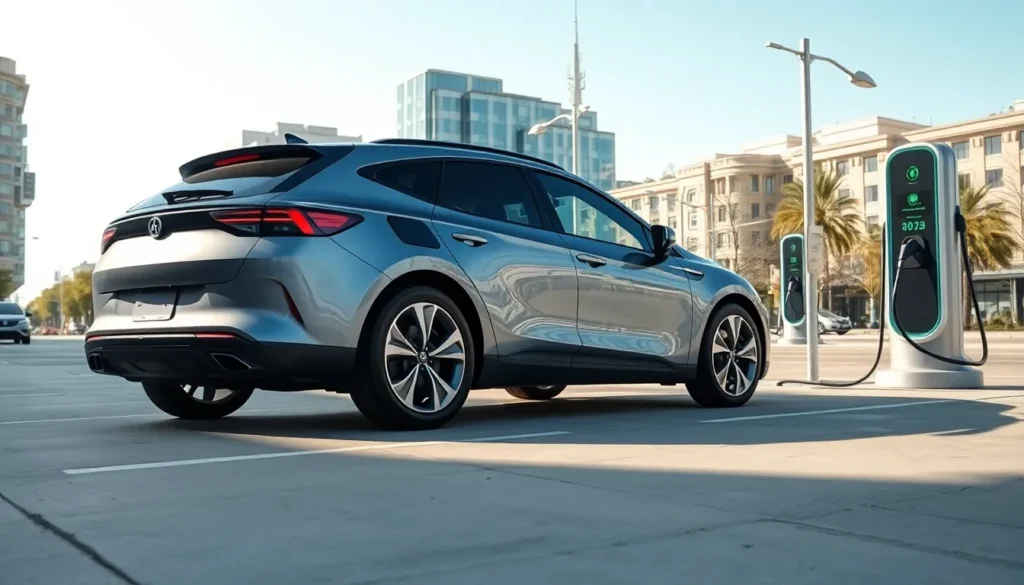
Ultra-fast charging stations capable of delivering 350 kW or more will become more common. These stations can add 200 miles of range in about 10 minutes. Companies like Tesla, Electrify America, and ChargePoint are investing billions in network expansion.
Electric vehicle trends 2026 also include bidirectional charging technology. This allows EVs to send power back to homes or the grid during peak demand. Ford and GM have already integrated this feature into several models, and more manufacturers will follow.
Rising Adoption of Affordable EV Models
Price has been the biggest barrier to EV adoption. That’s changing fast. Electric vehicle trends 2026 show a wave of affordable models hitting showrooms with starting prices below $30,000.
Tesla’s next-generation compact vehicle aims for a sub-$25,000 price point. Chinese automakers like BYD and NIO are expanding into Western markets with competitively priced options. Legacy manufacturers including Volkswagen, Hyundai, and Chevrolet are launching budget-friendly EVs to compete.
Battery costs continue to drop. The average cost per kilowatt-hour fell from $150 in 2022 to approximately $115 in 2024. Industry analysts project costs will reach $80-90 per kWh by late 2026. Lower battery costs translate directly into lower vehicle prices.
Used EV markets are also maturing. First-generation EVs from 2018-2021 are now available at attractive prices, making electric ownership accessible to more buyers. A three-year-old Nissan Leaf or Chevrolet Bolt can be purchased for under $15,000.
Fleet operators and ride-share companies are accelerating their EV purchases. Uber and Lyft have committed to fully electric fleets in major cities by 2030, with 2026 marking a significant milestone in their transition plans. This shift creates more awareness and normalizes EV use among everyday consumers.
Electric vehicle trends 2026 indicate that price parity with gasoline cars is within reach for many segments. Compact cars and crossovers will lead this shift.
Expansion of Autonomous and Connected EV Features
Self-driving technology and EVs go hand in hand. Electric vehicle trends 2026 highlight significant progress in autonomous driving capabilities.
Level 2+ and Level 3 autonomy will become standard in mid-range and premium EVs. Level 3 allows drivers to take their hands off the wheel and eyes off the road in certain conditions. Mercedes-Benz and BMW have received regulatory approval for Level 3 systems in select markets, with more approvals expected in 2026.
Tesla continues to push its Full Self-Driving software toward wider release. Chinese automakers like Xpeng and Huawei’s partnership with automakers are making rapid progress on highway and urban autonomous features.
Connected car features are expanding too. Over-the-air updates let manufacturers add new functions and fix issues without dealer visits. In 2026, most new EVs will receive regular software updates that improve performance, add features, and enhance safety systems.
Vehicle-to-everything (V2X) communication is another key electric vehicle trend for 2026. Cars will communicate with traffic lights, other vehicles, and road infrastructure to optimize routes and prevent accidents. Several U.S. cities are piloting V2X systems with plans for wider rollout.
In-car experiences are getting smarter. Voice assistants powered by AI can control more functions, answer questions, and learn driver preferences. Integration with smart home systems means drivers can adjust their thermostat or check security cameras from their vehicle’s screen.
Government Policies and Incentives Shaping the Market
Government action plays a major role in electric vehicle trends 2026. Policy decisions directly influence what automakers build and what consumers buy.
The U.S. Inflation Reduction Act continues to provide tax credits up to $7,500 for qualifying new EVs and $4,000 for used EVs. But, stricter domestic manufacturing requirements will affect which vehicles qualify. Buyers should check current eligibility before purchasing.
Europe’s CO2 emission standards tighten further in 2026. Automakers face heavy fines if their fleet average emissions exceed targets. This pressure pushes manufacturers to produce and promote more EVs to meet compliance.
China maintains its position as the world’s largest EV market. Government subsidies have decreased, but local regulations in major cities favor electric vehicles through license plate lotteries and traffic restrictions on gasoline cars.
Several U.S. states are implementing their own incentives. California, New York, and Colorado offer additional rebates on top of federal credits. Some states provide reduced registration fees or access to HOV lanes for EV drivers.
Charging infrastructure funding is flowing. The U.S. government allocated $7.5 billion for public charging stations through the Infrastructure Investment and Jobs Act. States are deploying these funds to fill gaps in rural and underserved areas.
Electric vehicle trends 2026 will be shaped by how these policies evolve. Potential changes in political leadership could adjust incentive programs, though industry momentum makes major rollbacks unlikely.