
Electric vehicles tools have become essential equipment as EV adoption continues to surge worldwide. Whether someone owns a Tesla, services Rivians at a shop, or simply wants to handle basic maintenance at home, having the right tools makes all the difference. EVs operate differently than traditional gas-powered cars. High-voltage systems, lithium-ion batteries, and specialized components require specific equipment for safe and effective work. This guide covers the must-have electric vehicles tools for diagnostics, battery maintenance, safety, and specialty repairs. From professional mechanics to weekend DIY enthusiasts, these tools help keep electric vehicles running smoothly.
Table of Contents
ToggleKey Takeaways
- Electric vehicles tools differ significantly from traditional automotive equipment due to high-voltage systems, lithium-ion batteries, and specialized EV components.
- EV-specific diagnostic scanners like Autel MaxiSys or Launch X431 provide deeper insights into battery health, motor temperatures, and charging system status.
- VDE-certified insulated tools rated for 1000V or higher are essential for safely working on EV high-voltage systems.
- Battery analyzers assess state of charge, state of health, and cell balance to ensure optimal EV battery performance and longevity.
- Thermal imaging cameras help detect hot spots in battery packs and motors, identifying potential degradation or failure before costly damage occurs.
- Modern EV maintenance requires software subscriptions for diagnostic databases and manufacturer-specific service information alongside physical tools.
Diagnostic and Testing Equipment
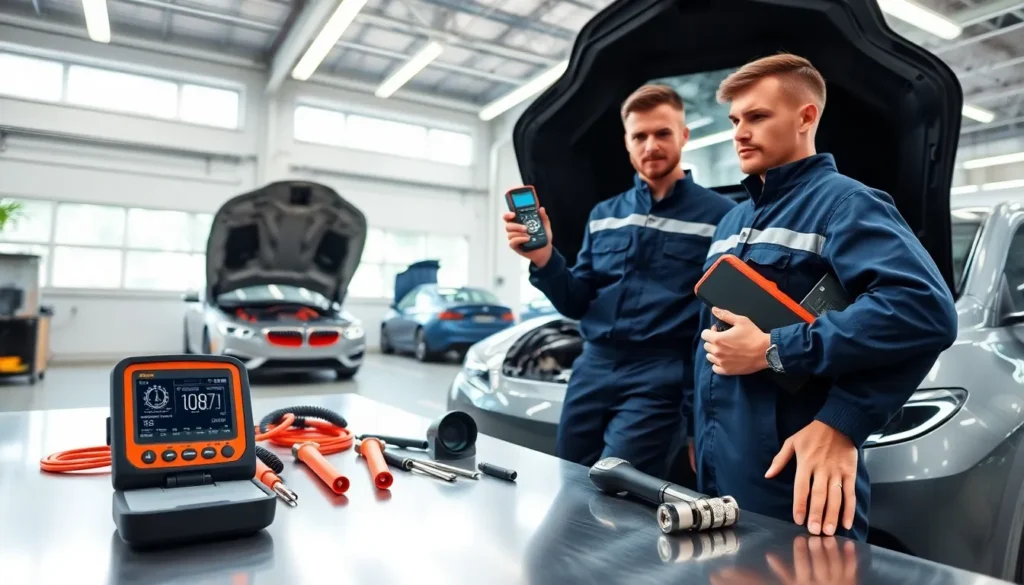
Diagnostic tools form the backbone of any EV toolkit. These devices help identify issues before they become expensive problems.
OBD-II Scanners for EVs
Standard OBD-II scanners work with many electric vehicles, but EV-specific scanners provide deeper insights. Tools like the Autel MaxiSys or Launch X431 read battery health data, motor temperatures, and charging system status. Some EV manufacturers require proprietary diagnostic software. Tesla owners, for example, often use third-party apps like Scan My Tesla paired with an OBD-II adapter.
Multimeters and Voltage Testers
A quality digital multimeter is non-negotiable for EV work. These devices measure voltage, current, and resistance across various components. For electric vehicles tools focused on safety, look for multimeters rated CAT III or CAT IV with voltage ranges up to 1000V DC. Fluke and Klein Tools offer reliable options that meet these specifications.
Insulation Resistance Testers
These specialized devices check the integrity of high-voltage cable insulation. A failing insulation system can create dangerous conditions. Mechanics use insulation resistance testers to verify that cables maintain proper isolation between high-voltage components and the vehicle chassis. Megger and Hioki produce industry-standard testers for this purpose.
Thermal Imaging Cameras
Heat reveals problems. Thermal cameras detect hot spots in battery packs, motors, and charging systems. A cell running hotter than its neighbors often indicates degradation or failure. FLIR and Seek Thermal make cameras ranging from affordable smartphone attachments to professional-grade handheld units.
Battery and Charging Tools
Batteries represent the heart of any electric vehicle. Proper electric vehicles tools for battery work ensure longevity and performance.
Battery Analyzers
These devices go beyond basic voltage readings. Battery analyzers assess state of charge, state of health, and individual cell balance. The Midtronics GRX-5100 and similar professional analyzers provide detailed reports on battery pack condition. Home users might opt for simpler tools that connect through the vehicle’s diagnostic port.
EVSE Testing Equipment
Electric Vehicle Supply Equipment (EVSE) testers verify that charging stations function correctly. These tools check ground fault protection, voltage output, and communication protocols between charger and vehicle. The EVSE Tester from Fluke specifically addresses Level 1 and Level 2 charging station diagnostics.
Portable EV Chargers
While not a repair tool per se, portable chargers belong in every EV owner’s trunk. Level 1 chargers plug into standard 120V outlets. Level 2 portable units require 240V connections but charge significantly faster. Brands like Grizzl-E and Lectron offer durable portable options.
Battery Lifting Equipment
EV battery packs weigh hundreds of pounds. Professional shops need battery lift tables and specialized handling equipment. These electric vehicles tools prevent injury and damage during battery removal or replacement. Stertil-Koni and other lift manufacturers now offer EV-specific solutions.
Insulated Hand Tools for High-Voltage Safety
Working with EV high-voltage systems demands insulated tools rated for 1000V or higher. Standard tools simply won’t protect against electrical hazards.
VDE-Certified Tool Sets
VDE certification indicates that tools meet strict European safety standards for electrical work. These insulated wrenches, pliers, screwdrivers, and socket sets feature multiple insulation layers. Wiha, Knipex, and Wera produce comprehensive VDE-certified electric vehicles tools sets designed specifically for hybrid and EV service.
Insulated Torque Wrenches
Proper torque matters on high-voltage connections. Under-tightened connections create resistance and heat. Over-tightened connections damage components. Insulated torque wrenches allow precise fastening while maintaining safety. Stahlwille and Gedore offer insulated torque tools popular in professional EV service shops.
High-Voltage Safety Gloves
Class 0 or Class 00 electrical gloves protect hands during high-voltage work. These rubber gloves undergo rigorous testing and require leather protector gloves worn over them. Workers must inspect gloves before each use and replace them according to manufacturer guidelines. Salisbury and Cementex supply gloves meeting ASTM standards.
Safety Disconnect Tools
Before any high-voltage work begins, technicians must disconnect the battery. Many EVs use service disconnect plugs or switches. Insulated pull hooks and specialized disconnect tools allow safe removal of these components. Some manufacturers provide vehicle-specific disconnect tools with their service equipment packages.
Specialty EV Maintenance Tools
Beyond diagnostics and safety gear, several specialty electric vehicles tools address unique EV maintenance needs.
Coolant System Tools
Many EVs use liquid cooling for batteries and motors. These systems require different coolant than traditional engines. Coolant testers verify proper mixture and condition. Vacuum fill tools eliminate air pockets during coolant changes. Electric coolant pumps help flush systems without running the vehicle.
Brake Bleeders for Regenerative Systems
EVs use regenerative braking, which reduces wear on traditional brake components. But, brake fluid still requires periodic replacement. Pressure bleeders and vacuum bleeders work on EV brake systems, though technicians must follow manufacturer procedures for vehicles with electronic brake boosters.
Motor and Inverter Service Tools
While most EV motors require minimal maintenance, specialty situations arise. Bearing pullers, alignment tools, and specific fastener sets address motor service needs. Inverter work requires extreme caution and often manufacturer-specific electric vehicles tools. Most shops send inverters to specialists rather than servicing them in-house.
Tire Pressure Monitoring Tools
EVs often run specialized low-rolling-resistance tires at specific pressures for optimal range. TPMS programming tools help technicians reset sensors after tire rotations or replacements. Autel and ATEQ offer universal TPMS tools compatible with most EV models.
Software and Subscription Services
Modern electric vehicles tools include software subscriptions for diagnostic databases and service information. Mitchell 1, ALLDATA, and manufacturer-specific portals provide wiring diagrams, service procedures, and technical bulletins essential for proper EV repair.